How To Choose The Right Truck Driving School In Ontario
If you’re searching for a truck driving school in Ontario, you’ve probably noticed something: many programs promise fast results and guaranteed certification. But here’s what you already know: the right school isn’t just about passing your road test. It’s about building the skills and habits that’ll keep you safe for the long haul.
If you’re considering AZ training in Ontario, this guide will help you compare programs with confidence, spot the red flags early, and choose a commercial driving school that actually prepares you for the real-world conditions.
Start with the non-negotiable: MELT and licensing requirements
In Ontario, Mandatory Entry Level Training (MELT) is required for new Class A licence applicants. The province sets a minimum standard of 103.5 hours of training. A legitimate trucking school should be able to explain exactly what that includes and how those hours break down.
When you’re talking to a school, ask them:
- What MELT includes and how hours are divided (in class, yard, road)
- How many hours are in-class, in the yard and on the road
- What’s included in tuition cost (road test prep, inspections, yard time, get specifics)
- What’s the typical timeline from the start of the course to the road test
- What you need before the road test, including endorsements like Z (air brake) when applicable
If they can’t give you clear answers or seem vague about MELT requirements, that’s your first red flag.
Instructors Make Or Break Your Training
Here’s the truth: you’re not just paying for seat time in a truck. You are paying for coaching, judgment calls, and real feedback from someone who knows what they’re doing.
Before you register, talk to someone from the company, and even better if you can speak to an instructor. Find out if the company prioritizes safety and decision-making, or are they teaching shortcuts? What teaching style do they use, and will that work for you?
You want someone who breaks things down step-by-step, not someone who rushes through explanations.
What to ask about instructors
- How long have instructors been training new drivers?
- What’s the process for student feedback during road practice?
- If I need extra support before my road test, what is the process?
A good instructor focuses on the fundamentals: pre-trip inspections, daily routines, and defensive driving. They teach industry standards, frameworks like Trucking HR Canada’s National Occupational Standards, not just what gets you through the test.
Equipment and training yard time matter more than flashy marketing
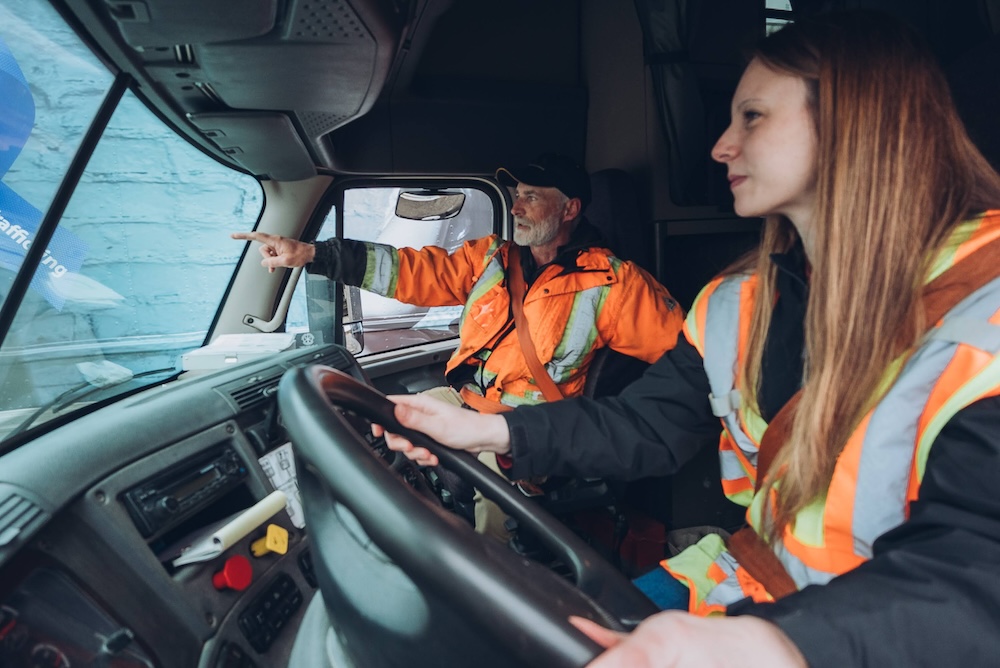
A reputable trucking school worth your time and money should be upfront about what you’ll actually be trained on and how often you’ll get to drive. The goal here is repetition. You need lots of time behind the wheel with an instructor, not just watching from the passenger seat.
What to look for:
- Consistent access to road training, not just observation
- Well maintained vehicles that reflect what you will see in the industry
- A training yard that supports all aspects of the job: backing, coupling, and inspection practice
If you are planning to work in positions that require air brakes, make sure the school supports the Z endorsement requirements and gives you proper training options.
Price Isn’t Everything: Class size and road time are
When you’re comparing programs, don’t just look at the cost. Find out what you’re actually getting for that money.
Ask about:
- What is the student to instructor ratio for yard and road?
- How much driving time does each student typically get per week?
- What’s the process if I need extra practice?
A higher quality program usually means more access, smaller student-instructor ratios, tighter coaching, consistent repetition and real support when you need it. If a school won’t provide these details, move on.
Job Support: Will They Actually Help You Get Hired?
A higher-quality training program can’t guarantee you a job, and if they do, that’s a red flag. But they should be able to support you and connect you to real opportunities.
Look for schools that offer:
- Resume help tailored to trucking roles
- Interview prep that reflects carrier expectations
- Introductions to carriers that hire entry-level drivers
- Relationships with industry associations or hiring carriers that highlight career pathways can be helpful when evaluating your options
Location and scheduling: Can you actually commit
This one is practical but crucial. If the school is too far away or the schedule doesn’t fit your life, you’re going to miss sessions. Consistency is everything when it comes to skills training.
Consider:
- Can you get to school easily, even in bad weather?
- Does the schedule work with your job and family commitments?
- Are there part-time options if you need them?
- What are the start dates, intake options, and makeup policies for missed classes
Choose a school that you can actually show up to every time.
Red flags that should make you run
Some warning signs are immediate deal breakers. If you see any of these, run away:
- Promises of a “guaranteed pass” or “guaranteed licence”
- Refusal to break down of hours, curriculum, and what tuition includes
- Pressure to pay quickly or refusal to answer questions
- Vague answers about MELT requirements or road test readiness
- Unsafe equipment or sketchy practices
A legitimate trucking school welcomes your questions. Transparency is part of safety culture.
Your comparison checklist
Here’s what a solid Ontario Class A training program looks like:
- Meets Ontario Class A mandatory training standard (MELT)
- Clearly breaks down hours and course timelines
- Stands by their instructor’s experience and provides feedback loops
- Strong focus on inspections, backing, coupling and defensive driving
- Realistic road routes and test prep that align with DriveTest expectations
- Reasonable class sizes and reliable truck access
- Clear policies and professional communication
- Resume and interview support, plus carrier connections and job placement guidance
Why KnowledgeSurge is a smart choice for Ontario AZ training
When you are choosing the best truck driving school in Ontario, you want a program that is transparent, safety focused, and built around real skill development, not just prep. KnowledgeSurge provides training that aligns with Ontario’s mandatory standards and focuses on what new truck drivers actually need: confidence, job ready driving skills, strong inspection routines, and professional support from the classroom to the road test.
For students seeking truck driver training in the Barrie area, KnowledgeSurge is a trusted option for starting a safer, stronger trucking career.